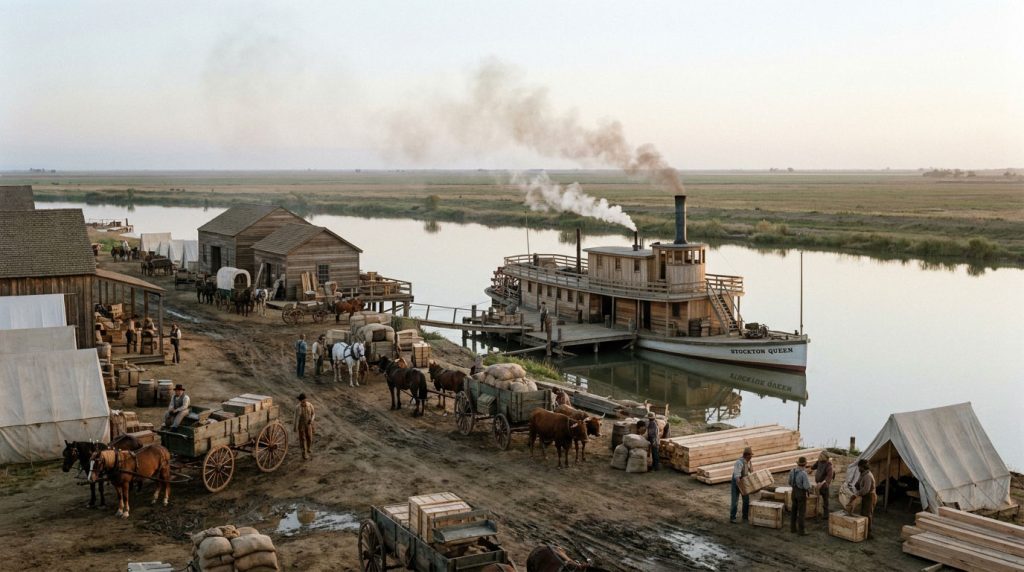
How the Gold Rush shaped Stockton is a story of opportunity beyond the goldfields. While prospectors searched the Sierra Nevada foothills, Stockton grew by connecting them with goods, transportation, and services. Its importance came less from digging for gold than from helping a mining economy function.
That story has a timely connection to California’s 2026 heritage initiative marking America’s 250th anniversary, which highlights Gold Rush sites alongside the experiences of different communities. Stockton offers a revealing local example: rapid growth brought enterprise and lasting connections, but also unequal opportunities and profound costs.
Stockton Before the Gold Rush
Stockton’s history did not begin with arriving prospectors. The surrounding Delta was already a homeland, with waterways supporting Indigenous communities long before a commercial town developed. The Port of Stockton’s account of the area’s early history identifies Rough and Ready Island as traditional Yokuts territory and describes expertise in navigation, fishing, and basketry.
Understanding that earlier history changes how we interpret the city’s growth. Waterways were not simply unused routes waiting for newcomers. They belonged to a living landscape with established communities, knowledge, and cultural meaning.
Charles Weber and a Growing Settlement
German immigrant Charles Weber helped develop the settlement that became Stockton. Before the mining boom, he acquired land through the Mexican land-grant system and encouraged settlement near the channel. As the Downtown Stockton Alliance’s founding history explains, the community known as Tuleburg grew into a supply point for gold seekers.
Stockton’s name can also cause confusion. Charles Weber was the town’s developer; Commodore Robert F. Stockton was its namesake. Keeping those roles separate helps readers follow the early story without assuming that the naval officer established the waterfront businesses or laid out the settlement.
The decisive discovery happened elsewhere. On January 24, 1848, James Marshall found gold at Sutter’s sawmill in Coloma, a site documented by California State Parks. As news spread, Stockton’s position between navigable waterways and the southern mining districts became increasingly valuable.
Stockton was officially incorporated on July 23, 1850. That milestone, recorded in Visit Stockton’s historical overview, shows how quickly a small settlement developed into an organized city during the rush.
How the Gold Rush Shaped Stockton’s Waterfront
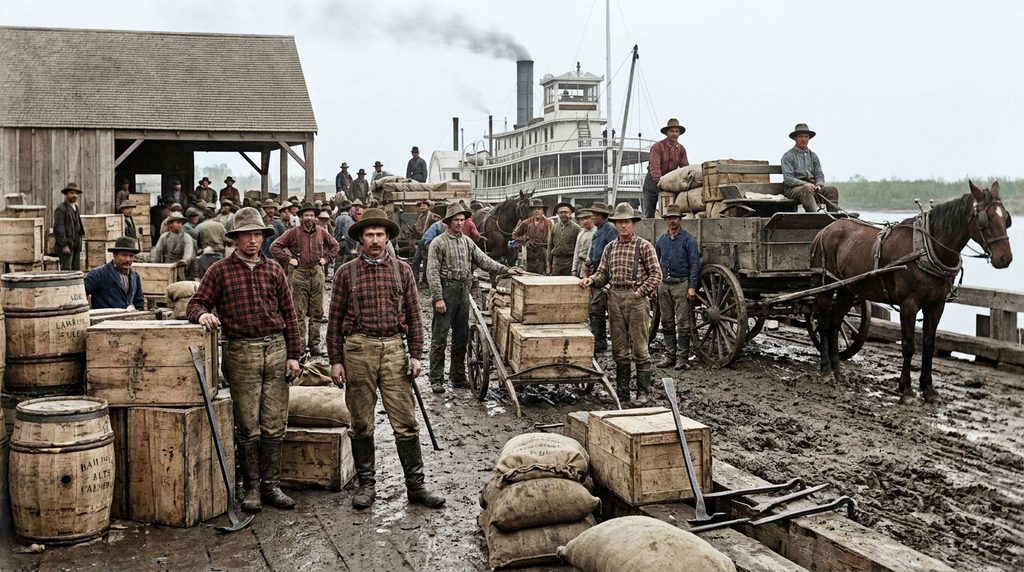
Stockton became a gateway to California’s southern mines. Its channel connected inland commerce with the wider river and bay network. Goods could arrive by water before continuing toward mining communities, making the landing place an important point of exchange rather than merely a stop along the way.
The simplest way to understand that advantage is to think about the journey of a supply shipment. A miner could not use goods still sitting aboard a vessel. Cargo needed unloading, storage, sale, and onward transport. Each step created a reason for people and businesses to gather near the waterfront.
A City That Supplied the Search for Gold
Weber recognized that providing for gold seekers offered commercial opportunities. The distinction matters: Stockton’s growth was tied to mining, but its businesses did not all depend on finding a productive claim. They served the people attempting to do so.
Everyday Needs Behind the Mining Boom
Think of the practical requirements of a mining trip: food, clothing, tools, and a way to carry them. Those needs help explain why a supply town mattered. Gold might attract a traveler to California, but ordinary goods made the journey and the work possible.
Viewed this way, Stockton’s waterfront was part of a larger working system. The memorable figure of the solitary prospector depended on connections between suppliers, transport workers, and customers. The city helps bring those less celebrated participants into the Gold Rush story.
Migration, Opportunity, and Unequal Treatment
The rush drew people from many places, but newcomers did not encounter equal conditions. The Library of Congress documents how Chinese migrants pursued California’s promise of gold, only to face uncertain work, isolation, and hostility. These statewide experiences provide important context for understanding Stockton’s developing communities.
The Library also describes discriminatory laws targeting Chinese immigrants. For Native peoples, colonization brought devastating violence. The Port’s historical account records both that harm and the endurance of Yokuts communities and cultural traditions.
A fuller account therefore asks more than who became wealthy. Who performed the work? Who could establish a business? Whose existing relationship with the land was disregarded? These questions do not diminish Stockton’s history; they make it more meaningful and more complete.
From Gold Rush Trade to Agriculture and Industry
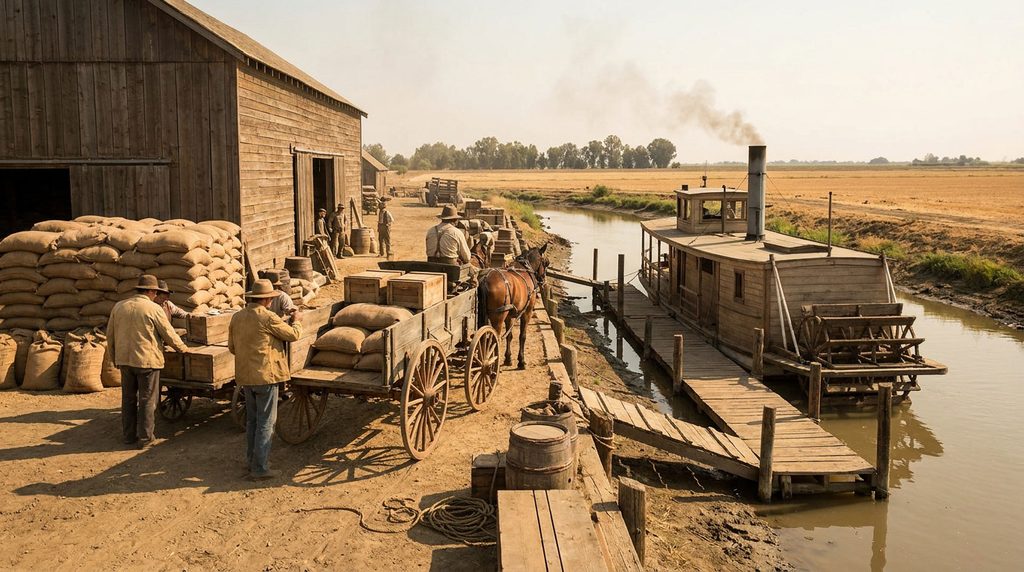
The Gold Rush did not provide a permanent livelihood for everyone who joined it. As the early boom changed, California’s economy broadened. The Library of Congress’s history of the transition beyond the Gold Rush describes growing agricultural production and continuing difficulties transporting goods.
In Stockton, processing and shipping agricultural products became increasingly important. Visit Stockton records flour mills, wagon factories, iron foundries, and shipyards around the channel by the late nineteenth century. The city’s commercial role expanded rather than disappearing with the first rush for gold.
The continuity is revealing: a place that helped connect miners with supplies could also connect farms and manufacturers with markets. Gold explains the initial surge, while the broader history of production and transportation explains why Stockton remained significant.
The agricultural transition also changed the land itself. The Port’s history describes Delta wetlands being drained and filled for farms during the nineteenth century. That environmental transformation reshaped places that Indigenous communities had long understood and used. The city’s economic history therefore also belongs to the history of its surrounding landscape.
The Modern Port Came Much Later
Gold Rush river commerce should not be confused with the opening of the modern deepwater port in 1933. The Port of Stockton’s historical timeline places that milestone decades after the mining boom. Keeping the dates separate makes the waterfront’s long development easier to understand.
Finding the Gold Rush Legacy Today
Museum collections offer a useful next step. The Haggin Museum’s history galleries connect Native history and the Gold Rush with agriculture, shipbuilding, and other industries. Its recreated flour mill helps place everyday work alongside the more familiar stories of prospectors and founders.
The San Joaquin County Historical Museum’s Erickson Building also explores the region’s first peoples, the Gold Rush, and the Weber family’s role in Stockton. Together, these subjects encourage visitors to see the city as a place shaped by many overlapping histories.
When exploring museum displays, check dates and distinguish original objects from later reconstructions. Both can teach history, but they offer different kinds of evidence.
Ultimately, the Gold Rush shaped Stockton by accelerating connections: between waterways and mining districts, workers and businesses, and local production and wider markets. Continue exploring Stockton History with that broader perspective, looking beyond the search for gold to the people and systems that helped build a city.