
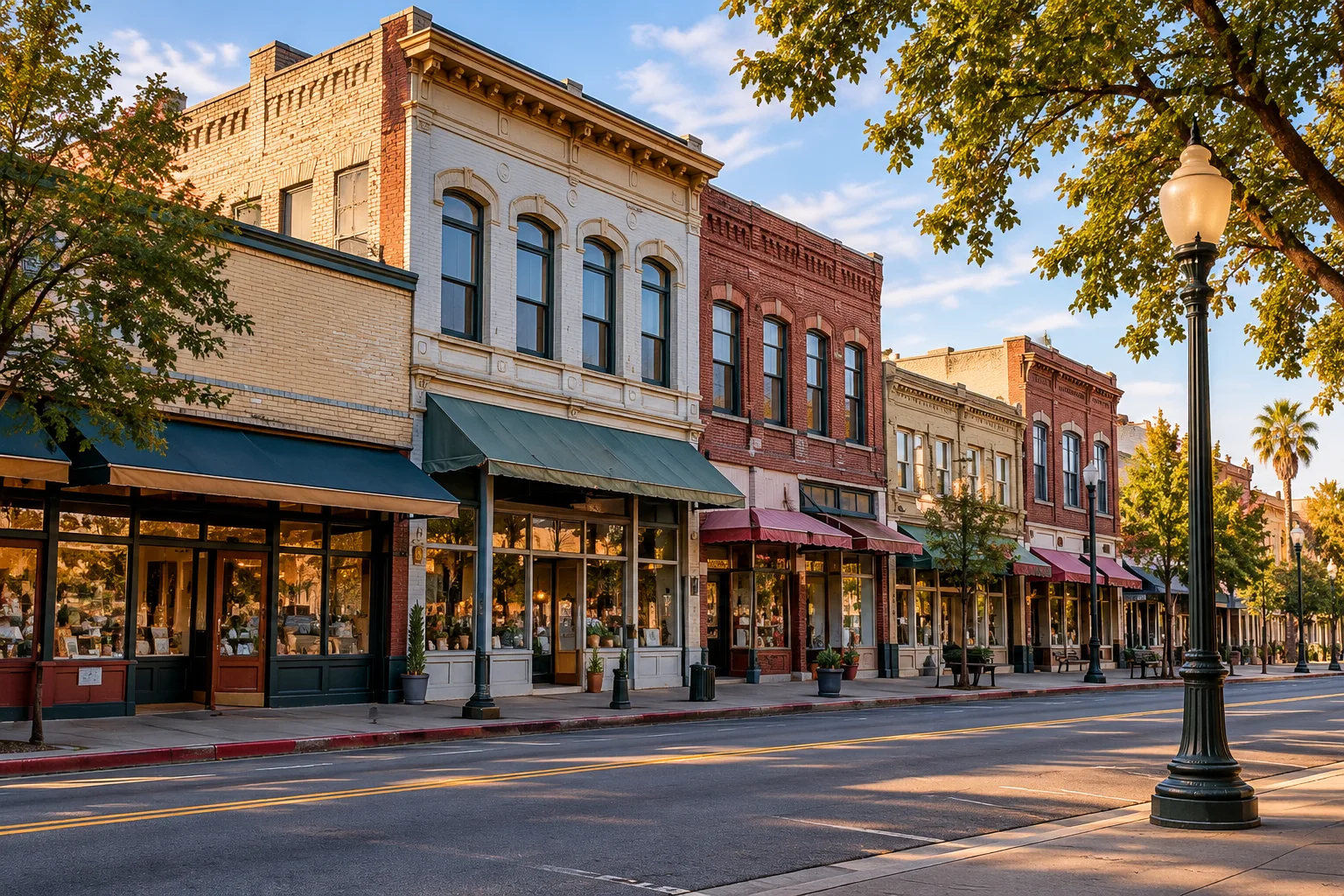
Little Manila in Stockton grew around the needs of people whose work helped sustain California agriculture. It offered places to eat, sleep, meet friends, organize, and build a life beyond the fields. Its history brings together migration, racial exclusion, family relationships, and the difficult question of whose neighborhoods a city chooses to preserve.
The remaining streets cannot show everything that once happened there. To understand Little Manila, it helps to read the neighborhood through several kinds of evidence: a hotel address, a club photograph, a worker’s account, and the memories of people who experienced both community life and displacement.
Why Stockton became a gathering place
Filipino migration to California developed within the unequal relationship between the United States and the Philippines. As the publisher’s account of Dawn Bohulano Mabalon’s research explains, the United States claimed the Philippines as a colony in 1898. In the following decades, Filipina and Filipino workers became important to agriculture in the San Joaquin Delta.
Stockton provided an urban meeting place within that agricultural region. Little Manila’s hotels, restaurants, grocery stores, churches, barbershops, and social spaces connected working lives with everyday needs. The neighborhood was part of the city’s development, a relationship also explored in our short history of Stockton.
Yet gathering in one area did not mean everyone had an equal choice about where to live or socialize. Little Manila Rising describes Main Street as an informal racial boundary in the early twentieth century. That history should not be turned into a claim that a single ordinance legally prohibited every crossing. The distinction between law, discriminatory practice, and community memory matters.
A neighborhood made through ordinary places
A list of businesses becomes more revealing when we ask what each place made possible. A hotel could connect an address with the search for work. A restaurant provided somewhere to eat and talk. A club created room for gatherings that were difficult to arrange in temporary accommodation. These are useful ways to interpret a neighborhood’s institutions, while leaving individual experiences to the records.
Look beyond the image of the lone farmworker
Men’s agricultural labor is central to Little Manila’s story, but it should not absorb every other experience. Mabalon’s research also considers women, families, religion, and subsequent generations. Asking who cooked, organized celebrations, raised children, or preserved photographs helps widen the questions without assuming every household followed the same pattern.
A photograph opens a door to community life

The University of the Pacific holds a Van Covert Martin photograph of a costume contest at the Rizal Social Club, dated July 4, 1939. Its catalog identifies the club’s address as 138 East Lafayette Street. That specific occasion gives the neighborhood a different emphasis from a photograph of agricultural work: people also gathered for recreation and celebration.
Make room for different generations
Pacific’s STOCKTONSpeaks! account of Eudosia Juanitas, a registered nurse, offers another entry into local Filipino American history. Its catalog connects her account with those of relatives from younger generations. This is a broader Stockton collection, not proof that every interviewee lived in Little Manila. Reading across such records helps a researcher ask how migration, work, and family opportunities changed over time.
What a single source cannot establish
A dated photograph establishes a particular recorded moment. It does not reveal everyone’s income, political beliefs, or feelings about the event. The catalog description and the image should be read together. If people can be identified through family knowledge, record who supplied that identification rather than silently treating a later recollection as part of the original caption.
Work and organizing reached beyond Stockton
The city’s community history belongs within a larger history of Filipino labor organizing. A well-documented example is the Filipino Community Hall in Delano, described by the National Park Service. There, members of the Agricultural Workers Organizing Committee voted on September 7, 1965, to strike against area grape growers. Filipino workers began the strike the next day.
Larry Itliong asked the largely Latino National Farm Workers Association to join. Its members entered the strike on September 16, and the groups shared a hall and strike kitchen. This happened in Delano, not in Stockton’s Little Manila. Keeping the locations distinct makes the wider connection clearer: meeting spaces, meals, and relationships could support collective action across a regional agricultural economy.
The work behind that economy also extended into processing and distribution. Our account of Tillie Lewis and Stockton’s canning story examines another part of that relationship between crops, labor, and the city.
When buildings and connections were removed

Urban redevelopment and freeway construction drastically altered Little Manila. The University of the Pacific’s Digital Deltas project overview describes extensive demolition beginning in the late 1960s. Little Manila Rising places much of the destruction associated with the Crosstown Freeway in the early 1970s. Together, these accounts describe a process across years, not one afternoon when an entire neighborhood disappeared.
A removed building could also mean the loss of a familiar meeting point or a business relationship. A road map captures the changed route, but it rarely explains those social consequences. Photographs, household histories, and organizational records help show what a transportation project’s footprint meant to the people living within it.
Preservation became a community project
In its account of its beginnings, Little Manila Rising explains that Dawn Mabalon and Dillon Delvo organized in 1999 as surviving neighborhood buildings faced demolition. Their work joined historical research with efforts to protect places that carried family and community meaning.
Research has also made it possible to explore lost spaces in another form. A University of the Pacific paper on digitally recreating Little Manila describes reconstructing buildings around El Dorado and Lafayette streets. Such models help explain spatial relationships, but they remain interpretations built from evidence. They should be identified as reconstructions whenever used in an article or classroom.
A useful next step is to follow one documented address through photographs, directories, and personal accounts. Ask when a business occupied the building, what its entrance looked like, and which nearby places appear in someone’s recollection. A missing building need not remain an anonymous gap when its location can be connected carefully with names, uses, and dates.
Little Manila’s importance does not depend on imagining a community without hardship or disagreement. It lies in the work of making a home, sustaining relationships, and claiming a place in Stockton despite unequal conditions. Reading its history closely means recognizing both what people built and the decisions that made so much of it difficult to keep.